The short answer
There is no single best cladding — the right choice depends on your priorities for appearance, maintenance, fire performance, durability and budget. For a natural look, timber (cedar or larch) or stone is hard to beat. For low maintenance with strong fire performance, fibre-cement is a leading all-rounder, as it is rot-proof, durable and usually non-combustible. For a low-maintenance wood look, composite works well. For the lowest budget, uPVC does the job on simple buildings. For a contemporary or premium feature, metal, brick slip or stone shine. On flats, taller buildings or homes near a boundary, fire performance often narrows the field. Match the material to what matters most for your home rather than chasing a universal best.
Asking for the single best cladding is the wrong question — the best one is whichever matches your priorities. This page helps you weigh them up.
Best by priority
- Natural looktimber or stone
- Low upkeep + firefibre-cement
- Wood look, low carecomposite
- Lowest budgetuPVC
- Modern/premiummetal, brick slip, stone
Start with your priorities
The best cladding follows from what you care about most:
- Appearance — natural authenticity (timber, stone) versus a clean modern finish (metal, fibre-cement, render-look).
- Maintenance — fit-and-forget (fibre-cement, brick slip, composite, uPVC) versus willing to maintain wood (timber).
- Fire performance — non-combustible materials (fibre-cement, metal, stone, clay brick slip) where the building or boundary demands it.
- Durability — longest life (stone, brick slip, fibre-cement, metal) versus shorter (uPVC, untreated softwood).
- Budget — from uPVC at the bottom to stone and premium metal at the top.
Rank these for your situation and the field narrows quickly.
How the main options stack up
The table is a broad guide. Treat costs as fitted ranges that vary with product, access and region.
| Type | Maintenance | Fire | Indicative cost/m² |
|---|---|---|---|
| Fibre-cement | Low | Usually non-combustible | £60–£120 |
| Composite | Low | Combustible | £60–£130 |
| Timber | Periodic | Combustible | £50–£120 |
| uPVC | Very low | Combustible | £40–£90 |
| Metal | Low | Non-combustible metal | £70–£160 |
| Brick slip / stone | Very low | Generally non-combustible | £80–£200+ |
Indicative fitted ranges for guidance only. Sources: Checkatrade and HomeOwners Alliance cost guides.
Match the cladding to your house and street
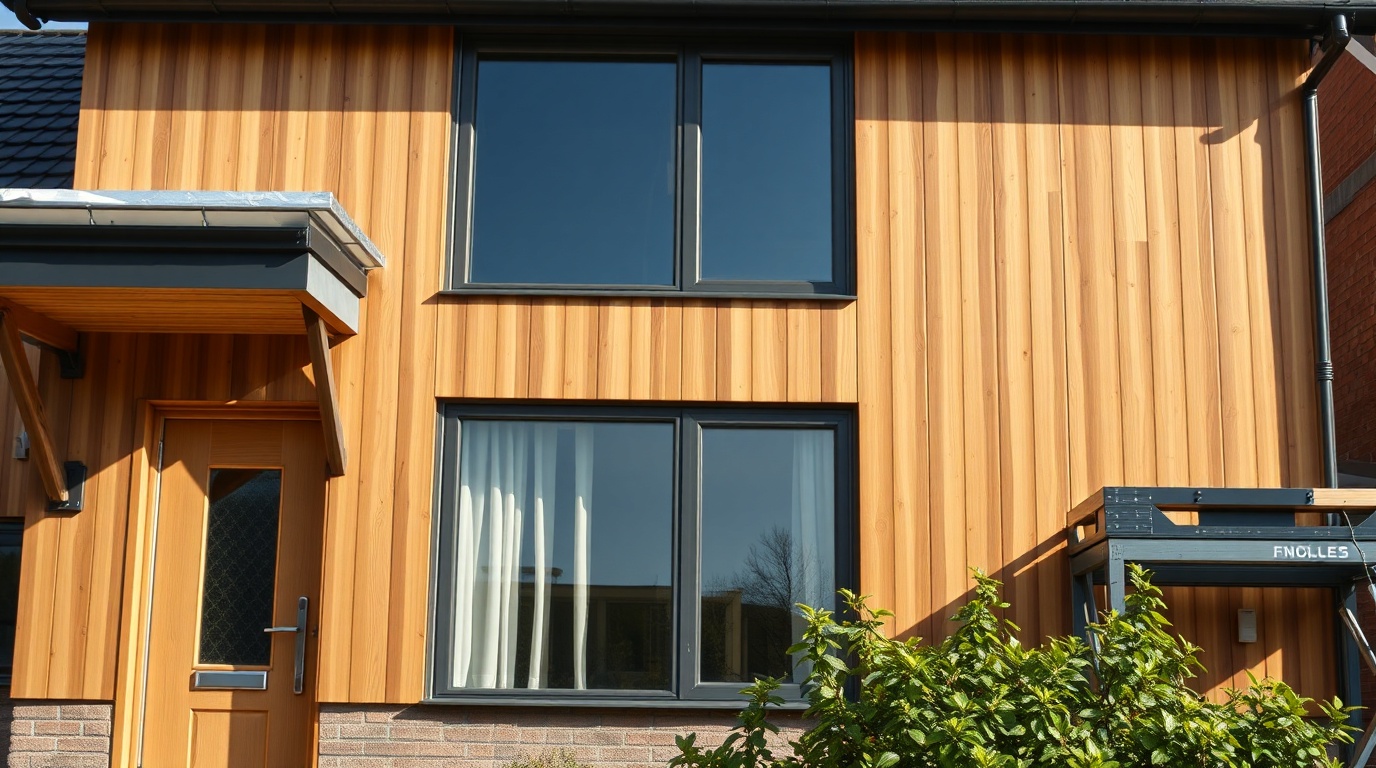
The best cladding also has to suit the property and its setting, not just your wish list. On a period or traditional home, natural timber, stone or brick slip usually sits more comfortably than plastic or sharp metal panels, and in a conservation area or on a listed building the choice may be constrained or require consent. On a contemporary house or extension, fibre-cement panels, metal or vertical timber can look right at home. It is also worth considering the street: a finish that complements neighbouring homes tends to add more to kerb appeal than one that stands out awkwardly. Practical factors matter too — the weight the wall can carry (relevant for stone and brick slip), the exposure of the site (coastal and very exposed walls are harder on materials), and whether you want to add insulation at the same time. Weighing the house, the setting and these practicalities alongside your priorities usually points clearly to a sensible shortlist.
Don't ignore fire and regulations
For many homes the deciding factor is not taste but rules. Cladding work falls under Building Regulations, and on flats, taller buildings and homes close to a boundary, fire performance can be a legal requirement — which often points toward non-combustible materials such as fibre-cement, metal, stone or clay brick slip, and rules out plastics and bare timber. Re-cladding in the same style is often permitted development on a typical house, but listed buildings, conservation areas, flats and changes of appearance can need planning permission. Always confirm what applies to your property with your local authority before committing, and ask suppliers for certified fire classifications where they matter.
Don't forget the build-up behind the cladding
The visible board is only part of the picture. Most cladding is a system: battens that set the boards off the wall and create a ventilated cavity, often a breather membrane on the wall to shed incidental water, the fixings sized and specified for the board, and sometimes a layer of insulation to improve the home's thermal performance at the same time. The quality of this build-up and the detailing at openings, sills, corners, the eaves and the base decide how watertight and long-lasting the result is — a premium board fitted badly will fail before a modest board fitted well. When comparing options and quotes, look past the material to the whole system and the installer's competence. On fire-sensitive buildings, remember the complete build-up is what is assessed, not just the outer skin, so insulation and membranes count too.
Mixing materials and features
You do not have to choose a single cladding for the whole house. Many of the best-looking results combine materials — for example fibre-cement or render to the bulk of the walls with a timber or metal feature on a gable, upper storey, porch or entrance, or brick slip to a plinth with a lighter board above. Mixing this way lets you place a premium or natural material where it has the most impact while keeping costs and maintenance sensible elsewhere, and it can help a re-clad sit better with neighbouring houses. It also lets fire-sensitive areas use a non-combustible material while a feature elsewhere uses something more decorative, subject to the rules for the building. The key is to plan the junctions between different materials and orientations so they are detailed cleanly and stay watertight. Treating the elevation as a composition, rather than defaulting to one material everywhere, often produces a more characterful and better-value result.
A simple way to decide
If you want a practical shortlist: pick fibre-cement for the best balance of low maintenance, durability and fire performance; timber for genuine natural character if you'll maintain it or let it silver; composite for a low-care wood look; uPVC only where budget rules and the building is simple; and metal, stone or brick slip for a premium or contemporary feature. Then check the fire and planning position for your specific home, assess the wall and its setting, and weigh the whole system rather than just the board. The honest answer to best cladding is whichever scores highest on your ranked priorities — there is no universal winner, only the right fit for your home and goals.
Frequently asked questions
What is the most low-maintenance cladding for a house?
Fibre-cement, brick slip, stone and uPVC are among the lowest-maintenance, generally needing only occasional cleaning, with composite close behind. Natural timber is the highest-maintenance because it needs periodic finishing or accepting that it will silver over time. For fit-and-forget upkeep, fibre-cement is a popular all-rounder.
What cladding is best for fire safety?
Non-combustible materials such as fibre-cement, metal, natural stone and clay brick slip perform best for fire, which is why they are favoured on flats and taller buildings. Plastics and timber are combustible. Always check the specific product's certified classification and the rules for your building type.
Does the best cladding depend on the type of house?
Yes. On a simple detached house almost any material is an option, so the choice is mainly taste and budget. On flats, terraces or homes near a boundary, fire regulations often require non-combustible cladding, which narrows the field considerably. Listed and conservation-area properties may also have appearance restrictions.
Sources & further reading
Figures on this page are typical UK ranges drawn from published sources and depend on your specific property. They are guidance, not a quotation.