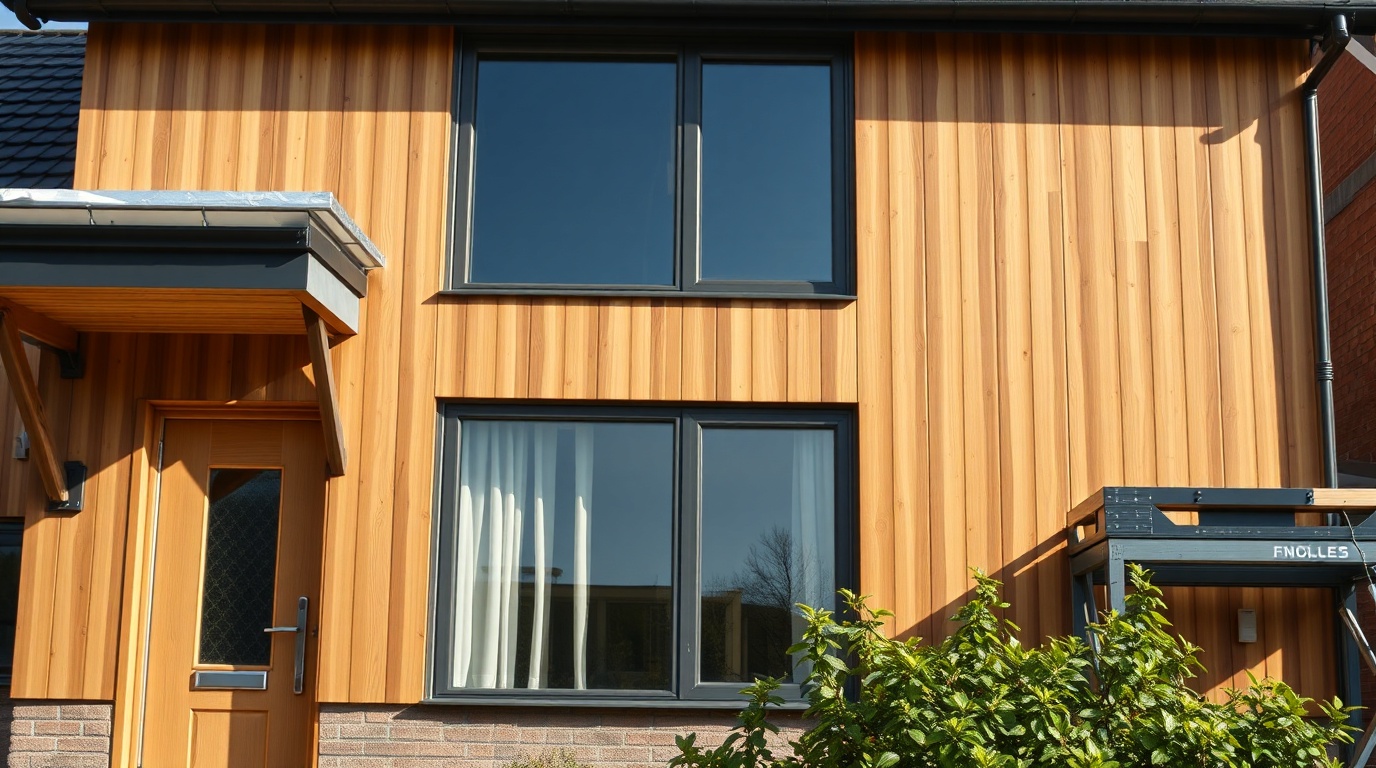
The short answer
Western red cedar and European larch are the two most popular natural softwoods for UK cladding, and the choice is mostly quality versus value. Cedar is naturally durable, very dimensionally stable (it resists cupping and twisting), lightweight and even-grained, with a refined appearance — but it is the more expensive. Larch is a denser, more resinous softwood with good natural durability and an attractive grain at a lower price, though it is heavier, knottier and more prone to movement. Both are naturally durable enough to be left to silver, or kept their colour with periodic finishing. Cedar suits a premium, low-movement finish; larch suits a value-led real-wood look. Detailing and a ventilated cavity matter for both.
Cedar and larch dominate the natural-timber cladding market in the UK. They look similar at a glance but differ in stability, durability and cost.
Cedar vs larch
- Cedarstable, durable, premium
- Larchtough, knottier, lower cost
- Weightcedar light / larch heavier
- Movementcedar low / larch more
- Bothcan silver or be finished
Western red cedar
Western red cedar is the benchmark cladding softwood. It is naturally durable, with natural oils that help it resist decay, and it is exceptionally dimensionally stable — it cups, twists and moves less than most softwoods, which keeps a cladding run looking crisp. It is lightweight, easy to work, low in resin, and has a fine, even grain with relatively few knots. The downside is cost: cedar is a premium-priced timber. Left untreated it weathers to a silver-grey; finished and maintained, it keeps a warm tone.
European larch
European larch is the popular value option. It is a dense, resinous softwood with good natural durability and a characterful, knottier grain. It costs less than cedar, which is its main draw, and gives a genuine real-wood look. The trade-offs are that it is heavier, has more knots, and is more prone to movement — cupping, splitting around knots and resin bleed can occur, so quality grading and good fixing matter. Like cedar it can be left to silver or kept finished. Siberian larch is a related, slow-grown variety sometimes specified for its tighter grain.
Profiles and grades
Both timbers are sold in similar profiles — feather-edge, shiplap, tongue-and-groove, square-edge and board-on-board — so the orientation and look are open to you whichever species you pick. The bigger variable is grade. Cedar is commonly available in cleaner, higher grades with few knots, which suits a refined, even appearance; lower clear grades exist too at lower cost. Larch is more naturally knotty, and grading matters more because knots, splits and resin pockets affect both looks and how the board behaves — better grades have fewer, sound knots. Siberian larch, a slow-grown variety, has tighter growth rings and is often specified where a denser, more stable larch is wanted. When comparing prices, compare like grades: a high clear grade of larch closes some of the gap to cedar, while a knottier grade is where larch's value advantage is greatest. The supplier should be able to explain the grade and its implications.
How they compare
The table summarises the practical differences. Treat durability descriptions as a guide, not a guarantee.
| Factor | Western red cedar | European larch |
|---|---|---|
| Durability | Durable | Moderately durable |
| Stability | Very good | Moderate (more movement) |
| Weight | Light | Heavier |
| Knots/resin | Few, low resin | More knots, resinous |
| Relative cost | Higher | Lower |
Indicative comparison for guidance; durability follows natural-durability conventions. Source: TRADA timber cladding guidance.
Weathering, finishing and movement
Left untreated, both silver to grey over time, but they get there a little differently. Cedar's even grain and low resin tend to give a more uniform patina, while larch's knots and resin can weather less evenly, with some resin bleed possible early on. If you want to hold the original colour, both accept a penetrating stain or oil that is re-applied periodically; film-forming paints are generally avoided on cladding because movement can crack them. Movement is the other practical contrast: cedar is very stable and stays put, whereas larch is more prone to cupping, twisting and splitting around knots, so it benefits from careful fixing and, on wider boards, secondary fixing to control movement. Both should be fitted with a ventilated cavity and corrosion-resistant fixings. None of this makes larch a poor choice — it simply needs a little more allowance for its livelier nature, which is part of the trade-off for its lower cost.
Sustainability and sourcing
Both are renewable softwoods, but where they come from affects their credentials. European larch is widely grown across Europe, including the UK, so it can carry lower transport miles and is often the more local choice, while western red cedar is typically imported from North America, adding to its footprint. Siberian larch travels furthest of the common options. Whatever the species, the most important step is to choose timber certified to a recognised scheme such as FSC or PEFC, which confirms it comes from responsibly managed forests; certification matters more environmentally than the species itself. Both timbers are naturally durable enough to be used without heavy chemical treatment, which is a plus, and at end of life both can be reused, recycled or burned for energy. If sustainability is a priority, larch's potential for closer sourcing can give it an edge, but a certified cedar from a well-managed forest is also a sound choice. Ask the supplier about origin and certification so the comparison is made on real information rather than assumptions.
Which should you choose?
Choose cedar if you want the most stable, refined, low-movement finish and are happy to pay a premium — it gives the cleanest long-term look with fewer knots and less twisting. Choose larch if you want a genuine natural appearance at a lower cost and don't mind a knottier, more rustic grain and a bit more movement. For both, longevity depends as much on the detailing as the species: a ventilated cavity behind the boards, corrosion-resistant (often stainless) fixings, good base and end-grain detailing, and a clearance from the ground. Both can be left to silver or maintained with a finish. Whatever you choose, source responsibly certified timber and fit it to Building Regulations, checking fire rules on flats or taller buildings as both are combustible.
Frequently asked questions
Is cedar or larch more durable?
Western red cedar is generally rated as more naturally durable and far more dimensionally stable than larch, so it moves and twists less. Larch is moderately durable and tough, but more prone to movement and knots. Both last well when detailed correctly with a ventilated cavity and good fixings.
Does cedar or larch cost more?
Cedar costs more — it is a premium cladding timber. Larch is the value choice, giving a genuine natural look at a lower price, which is its main appeal. The price gap is a key reason many homeowners choose larch when budget matters and a knottier grain is acceptable.
Do cedar and larch both silver over time?
Yes. Both are naturally durable enough to be left untreated, in which case UV and weather turn them a silver-grey over time. If you prefer to keep their original colour, both can be finished with a stain or oil that is re-applied periodically. Silvering is a cosmetic change, not decay.
Sources & further reading
Figures on this page are typical UK ranges drawn from published sources and depend on your specific property. They are guidance, not a quotation.