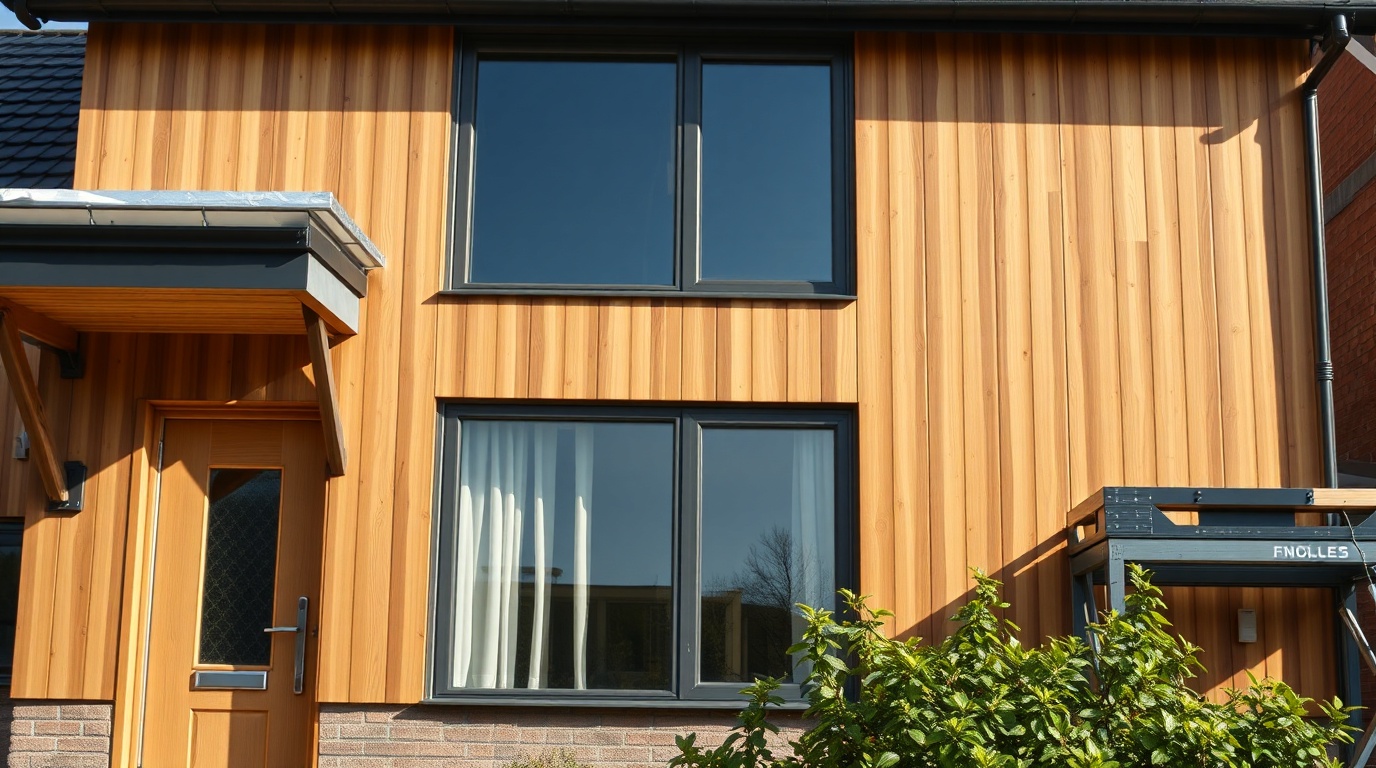
The short answer
Neither cladding nor brick is universally better — they suit different goals. Brick is a traditional, solid, structural-looking masonry skin that is extremely durable, low-maintenance and non-combustible, lasting for the life of the building, but it is heavy, slower to build and harder to change later. Cladding is a lighter outer skin of boards or panels (timber, composite, fibre-cement, metal, etc.) that offers more design variety, faster installation and easy pairing with insulation, with maintenance and fire performance varying by material. If you want a brick look without full masonry, brick slip cladding bridges the two. The choice depends on appearance, weight, speed, flexibility, maintenance and cost, and on what already suits your home and street.
Brick is the default exterior in much of the UK, but cladding offers a lighter, more varied alternative. Here is how the two compare.
Cladding vs brick
- Bricksolid, durable, traditional
- Claddinglighter, varied, faster
- Firebrick non-combustible
- Insulationcladding pairs easily with EWI
- Brick slipbridges the two
What each one offers
Brick is a fired-clay masonry skin, usually built as an outer leaf with a cavity behind. It is solid, weighty and traditional, virtually maintenance-free, non-combustible and capable of lasting well over a century. Cladding is a separate, lighter outer layer — timber, composite, fibre-cement, uPVC, metal or stone — fixed on battens with a ventilated cavity. It gives a wide choice of looks and textures, is generally quicker to install, and is easy to combine with external wall insulation. Where you want the brick aesthetic without building a full wall, brick slip cladding applies thin brick faces to a backing, blending both approaches.
Durability, maintenance and fire
The two differ in how they age and perform:
- Durability — brick is exceptionally long-lasting; cladding lifespan varies from decades (composite, timber) to 50 years or more (fibre-cement, brick slip, stone, metal).
- Maintenance — brick needs very little beyond occasional repointing; low-maintenance cladding is similar, but timber needs periodic care.
- Fire — brick is non-combustible; cladding ranges from non-combustible (fibre-cement, metal, stone, clay brick slip) to combustible (timber, composite, uPVC), which matters on flats and taller buildings.
- Flexibility — cladding can be replaced or restyled more easily; brick is permanent.
Structure, weight and the wall behind
A key practical difference is how each relates to the wall. A brick outer leaf is heavy masonry that needs proper foundations and support; on a new build it is laid as the outer skin of a cavity wall, and adding a full brick skin to an existing house is a significant undertaking. Cladding is comparatively light and is fixed on battens to the existing wall, so it can usually be added to a sound house without new foundations, and it can hide an uneven or tired wall surface while creating a ventilated cavity. Brick slip cladding sits in between — it gives the brick look at a fraction of the weight, fixed as a clad system rather than a structural leaf, which is why it is used over insulation and on panels where full brick would be too heavy. So the supporting structure, the weight it can carry and whether you are building new or upgrading an existing home all feed into the choice.
Cost and installation
Costs overlap and depend heavily on the material and the building, so compare like-for-like.
| Factor | Brick | Cladding |
|---|---|---|
| Look | Traditional masonry | Varied (wood, metal, stone) |
| Weight | Heavy | Lighter (most types) |
| Install speed | Slower (laid by hand) | Generally faster |
| Maintenance | Very low (repointing) | Low to periodic (by type) |
| Fire | Non-combustible | Varies by material |
Indicative comparison for guidance only; costs vary widely with material, area and access. Sources: Checkatrade and HomeOwners Alliance cost guides.
Appearance, value and flexibility
Beyond durability, the two offer different things to a home. Brick is the familiar, expected finish across much of the UK, and it reads as solid and permanent, which buyers tend to trust; it is also effectively fixed once built, so changing the look later means significant work. Cladding offers far more design flexibility — a wide range of materials, colours, textures and orientations — and it can be restyled or replaced more easily down the line, which suits homeowners who want a distinctive or contemporary look or the option to update it. On value, a sympathetic, well-executed finish of either type can enhance a property, while a finish that clashes with the house or street can detract; the quality of the work and the suitability to the home usually matter more than the category. Many homes get the best of both by combining brick or brick slip with a cladding feature, blending the reassurance of masonry with the character of a clad material.
Planning, regulations and the street
The decision is not only practical — it can also be constrained by planning and context. In much of the UK, brick is the expected finish, and on some estates or in conservation areas the local authority will want new work to match the prevailing materials, which can favour brick or brick slip over a contrasting clad finish. Changing a brick house to timber, metal or render is more likely to need planning permission than a like-for-like brick repair, and listed buildings and protected areas have tighter controls still. Both approaches fall under Building Regulations, and on flats, taller buildings or homes near a boundary the fire performance of the chosen system is assessed — brick is non-combustible, while cladding ranges from non-combustible to combustible depending on the material. It is also worth thinking about the street scene and resale: a finish sympathetic to neighbouring houses tends to be safer for value than one that stands out awkwardly. Checking the planning position and building-control requirements before committing avoids expensive missteps whichever route you take.
Which should you choose?
Choose brick if you want a traditional, solid, ultra-durable, low-maintenance finish that matches typical UK housing and lasts the life of the building, and you are not concerned about weight or build speed. Choose cladding if you want design variety, a lighter and faster finish, or to add external wall insulation easily, accepting that maintenance and fire performance depend on the material. If you love the brick look but want it lighter or over insulation, brick slip cladding gives the appearance of brick as a clad system. On flats, taller buildings or homes near a boundary, fire performance is a key consideration, and brick or non-combustible cladding may be required. All work must comply with Building Regulations, and changes of appearance can need planning permission — check before you commit.
Frequently asked questions
Is cladding cheaper than brick?
It can be, but it depends on the material. Budget cladding such as uPVC is usually cheaper than a brick skin, while premium cladding in stone or metal can cost more. Brick also involves slower, skilled labour. Compare like-for-like quotes for your specific building rather than assuming one is always cheaper.
Does cladding last as long as brick?
Brick is exceptionally long-lasting, often outliving most cladding. However, durable cladding such as fibre-cement, brick slip, stone and good metal can last 50 years or more. Timber and uPVC have shorter practical lifespans. For maximum longevity with minimal upkeep, brick and the most durable claddings are comparable.
Can you put cladding over brick?
Yes, cladding is often fixed over existing brickwork on battens with a ventilated cavity, and it is a common way to refresh tired brick or to face external wall insulation. The wall and fixings must be sound, and the work must comply with Building Regulations and any fire requirements for the building.
Sources & further reading
Figures on this page are typical UK ranges drawn from published sources and depend on your specific property. They are guidance, not a quotation.