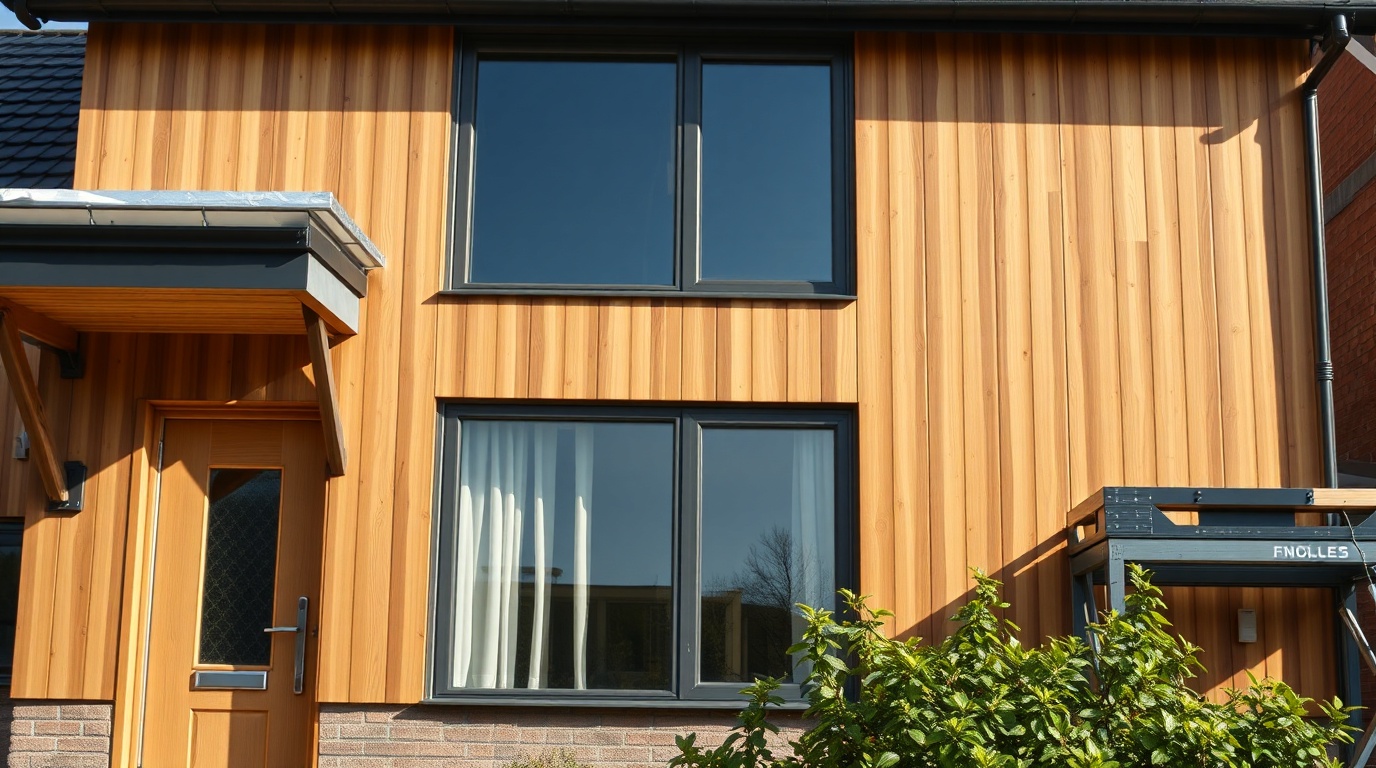
The short answer
The choice between composite and timber cladding is mainly maintenance versus authenticity. Composite (a wood-fibre and recycled-plastic blend) resists rot, warping and insects and needs only occasional cleaning, so it is the low-upkeep option that looks like wood without behaving like it. Timber (cedar, larch and similar) gives a genuine natural appearance and texture that composite can only imitate, but it weathers and usually needs periodic finishing, or you accept it silvering over time. Composite is more consistent and predictable; real wood has more character and can be more sustainable if responsibly sourced. Costs overlap, with quality composite and good timber in a similar range. The right pick depends on whether you value low maintenance or natural authenticity most.
Composite and timber cladding chase the same look from opposite directions — one is real wood, the other engineered to act like it. Here is how they differ.
Composite vs timber
- Compositelow maintenance, uniform
- Timbernatural look, more upkeep
- Rotcomposite resists / timber varies
- Lifespanboth decades, product-led
- Costbroadly overlapping
Appearance and authenticity
Timber wins on authenticity. Real cedar, larch or modified wood has natural grain, depth and colour variation, and it ages with character — either kept finished or left to silver naturally. Composite imitates this well, especially premium capped boards, but it reads more uniform up close and the texture is engineered rather than genuine. If a true natural appearance matters most, timber leads. If you want a consistent, controlled wood-look that does not change much over time, composite delivers that predictability.
Maintenance and durability
This is where composite earns its place:
- Composite — does not rot, will not be eaten by insects, will not splinter, and needs only an occasional wash. Capped boards resist fading and staining well.
- Timber — naturally durable species like cedar and larch last well, but the wood weathers visibly. To keep the original colour you must re-coat periodically; otherwise it silvers. Less durable or poorly detailed timber can rot if it stays wet.
Both need correct fixing and (for timber) a ventilated cavity. For minimal ongoing effort, composite is the easier choice; for those happy to maintain wood or to let it silver, timber is fine.
Installation differences
Both are fixed to battens over a ventilated cavity, but they behave differently during fitting. Timber can be cut, planed and fixed with ordinary woodworking tools, takes nails or screws readily, and minor variations can be worked around on site; it does, however, need correct detailing — a ventilated cavity, corrosion-resistant (often stainless) fixings, protected end grain and clearance from the ground — to reach its full life. Composite is heavier, so the framework must suit the load, and it has significant thermal movement, meaning installers must leave expansion gaps and use clips or fixings designed to let the board move; ignoring this can cause bowing or stress at fixings. Composite suppliers publish prescriptive fixing instructions that must be followed to keep the warranty valid. In short, timber is more forgiving and traditional to fit, while composite is more system-driven and unforgiving of guesswork, though neither is difficult for an experienced installer.
Cost, lifespan and sustainability
The numbers overlap, so value often comes down to upkeep and lifespan rather than upfront price.
| Factor | Composite | Timber |
|---|---|---|
| Fitted cost | ~£60–£130/m² | ~£50–£120/m² |
| Maintenance | Occasional clean | Periodic re-coat or silver |
| Rot/insect risk | Very low | Varies by species/detailing |
| Look | Uniform wood-effect | Natural, characterful |
| Sustainability | Recycled-plastic content | Renewable if certified |
Indicative fitted ranges for guidance only. Sources: Checkatrade and HomeOwners Alliance cost guides; TRADA for timber.
How each ages
The way the two materials weather is central to the choice. Timber changes noticeably over time: left untreated it silvers to grey, often unevenly across elevations that get different sun and rain, and finished timber needs its coating refreshing as the wood moves and weathers. For some owners this living, changing surface is part of the appeal; for others it is upkeep they would rather avoid. Composite is designed to stay much closer to its original appearance — capped boards resist fading and staining, with most colour change happening in the first year or two and then stabilising. It will not rot, splinter or be eaten by insects, so it tends to look consistent for years with only cleaning. Neither is truly maintenance-free, but composite asks for far less attention, while timber rewards a little care with genuine character. Matching this to how much weathering and upkeep you want is the heart of the decision.
Sustainability weighed up
The environmental comparison is genuinely two-sided. Timber is a renewable material: responsibly grown and harvested wood locks up carbon and, when certified to a recognised scheme, comes from forests managed for the long term. At the end of its life timber can be reused, recycled or burned for energy, and it needs no plastic. Its weakness is that durability often depends on either naturally durable species or chemical treatment, and finishes need periodic renewal. Composite reuses recycled plastic and wood fibre that might otherwise be waste, and its long, low-maintenance life means fewer replacements and no coatings; but it blends materials in a way that makes it harder to recycle at end of life, and it depends on plastic. Neither is clearly greener in every respect — certified timber leads on renewability and end-of-life, composite on diverting waste plastic and avoiding finishes. The honest answer is that sourcing, lifespan and disposal route matter more than the headline material, so it is worth asking the supplier about certification and recycled content for the specific product.
Which should you choose?
Choose composite if low maintenance is your priority, you want a predictable, rot-proof board, and you are happy with a wood-effect rather than the real thing. Choose timber if authenticity and natural character matter most, you like the idea of wood that silvers or can be finished, and you are willing to maintain it or accept its weathering. Sustainability cuts both ways: composite uses recycled plastic but is harder to recycle at end of life, while responsibly sourced timber is renewable — look for recognised certification. Both must be fitted to Building Regulations, and you should check the fire classification of either product on flats, taller buildings or homes near a boundary, as both contain combustible content.
Frequently asked questions
Is composite cladding better than timber?
Better depends on your priority. Composite is lower-maintenance and rot-proof but looks more uniform; timber is more authentic and characterful but needs upkeep or accepts silvering. For minimal effort choose composite; for a genuine natural finish choose timber. Costs are broadly similar.
Does composite cladding look like real wood?
Quality composite, especially capped boards with a textured surface, looks convincingly like wood from a normal viewing distance. Up close it tends to look more uniform than natural timber, which has genuine grain and colour variation. Premium products narrow the gap considerably.
Which is more eco-friendly, composite or timber?
Responsibly sourced, certified timber is renewable and can be recycled or burned at end of life, making it strong environmentally if sourced well. Composite reuses recycled plastic but is harder to recycle later. Neither is clearly greener overall — it depends on sourcing, lifespan and end-of-life handling.
Sources & further reading
Figures on this page are typical UK ranges drawn from published sources and depend on your specific property. They are guidance, not a quotation.