The short answer
Horizontal and vertical cladding use the same materials but run the boards in different directions, which changes both the look and the detailing. Horizontal cladding (the traditional weatherboard or shiplap arrangement) is the most common, tends to make a building look longer and lower, and naturally sheds rainwater down overlapping boards. Vertical cladding makes a building look taller, gives a cleaner, more contemporary or barn-like feel, and can shed water well too — but it relies on the right profile and counter-battening so water and air can drain and ventilate behind it. Neither is better overall; the choice is mainly aesthetic, with practical differences in battening, profile and how each weathers. Both must be correctly detailed to stay watertight.
Once you have chosen a cladding material, you choose a direction. Horizontal and vertical look quite different and need slightly different support behind them.
Horizontal vs vertical
- Horizontalcommon, looks longer/lower
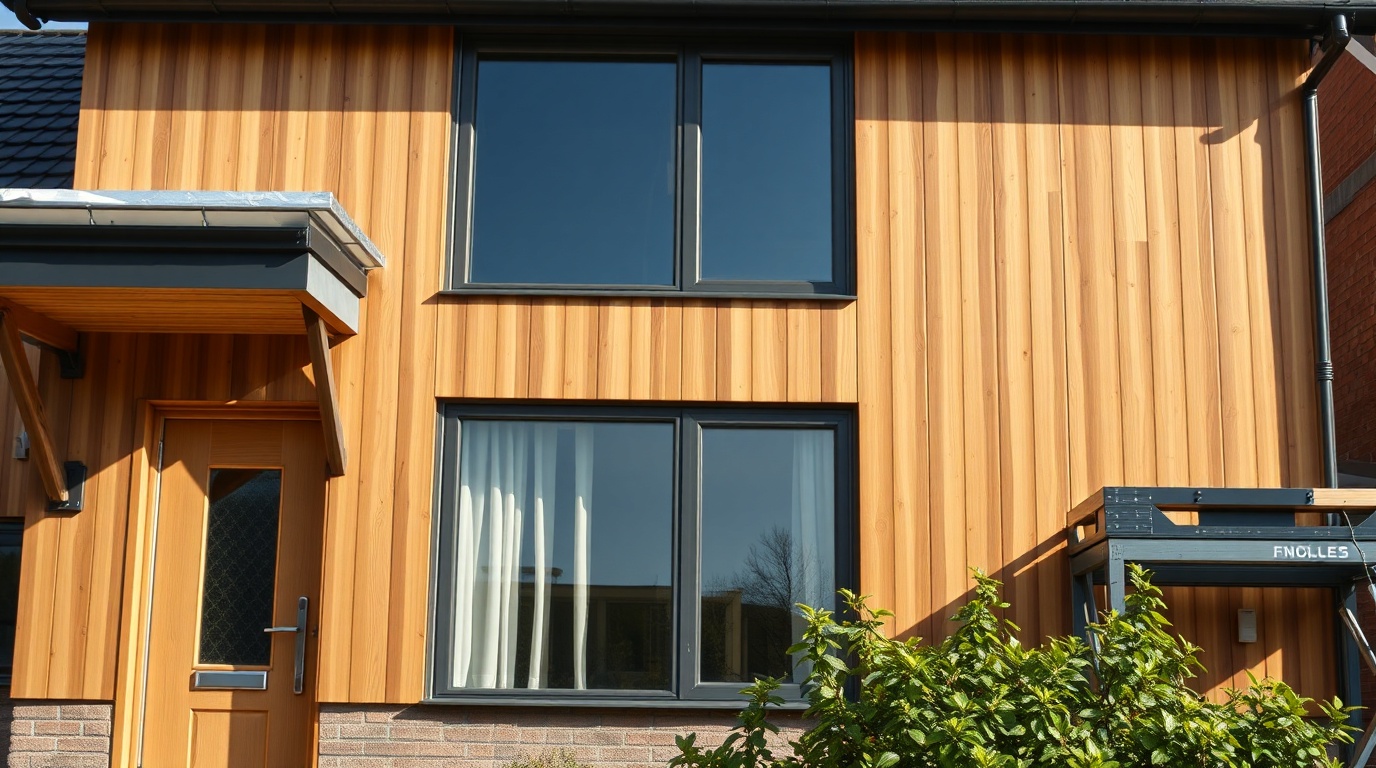
- Verticallooks taller, modern/barn
- Waterboth shed if detailed right
- Battensvertical needs counter-battens
- Choicemainly aesthetic
How they look
Orientation strongly affects how a building reads. Horizontal cladding — the classic weatherboard, shiplap or feather-edge arrangement — emphasises width, making a house look longer and lower, and it carries a familiar, traditional feel. Vertical cladding draws the eye upward, making a building look taller and often more contemporary; it also suits a rural, barn-style aesthetic, especially in timber. Many homes mix the two — for example horizontal to the main walls and vertical on a gable or feature — to add interest. The choice is largely about the proportions and character you want.
Water-shedding and battening
The bigger practical difference is behind the boards:
- Horizontal — boards lap over each other so rain runs down the face naturally. They are fixed to vertical battens, which also lets air rise through the cavity to ventilate and dry the cladding.
- Vertical — boards run up the wall, so the system relies on the correct profile (such as board-on-board or shiplap) to shed water at the joints. It typically needs counter-battens — a first layer of horizontal battens, then vertical ones — so water can drain and air can still circulate behind the cladding.
Both can be fully watertight when detailed correctly; vertical simply needs that extra battening layer and careful joint detailing.
Profiles that suit each direction
The board profile is chosen to match the orientation so the cladding sheds water correctly. For horizontal runs, lapped profiles like feather-edge and shiplap are traditional, overlapping so rain runs down the face, while tongue-and-groove and square-edge boards are also used with appropriate detailing. For vertical runs, board-on-board (where a top board covers the gap between two lower boards) and shiplap profiles are common because they handle the joints well when water runs straight down them. Some profiles work in either direction, but using a profile designed for the chosen orientation matters, because a board meant to lap horizontally may not shed water reliably if simply turned vertical. The cladding material also influences this — timber, fibre-cement, composite and metal each offer profiles tailored to horizontal or vertical fixing, so it is worth confirming the manufacturer's recommendation for the direction you want.
Practical comparison
The table sets out the main differences. Material cost is the same; vertical can add a little labour for counter-battening.
| Factor | Horizontal | Vertical |
|---|---|---|
| Visual effect | Longer, lower | Taller, modern/barn |
| Battening | Vertical battens | Counter-battens needed |
| Water-shedding | Laps shed naturally | Profile-dependent |
| Commonality | Most common | Increasingly popular |
| Labour | Simpler | Slightly more |
Indicative comparison for guidance only; detailing requirements vary by material and profile. Sources: TRADA and HomeOwners Alliance guidance.
Weathering and practical considerations
Orientation can subtly affect how cladding weathers and performs. On horizontal boards, the lower edge of each lap and any ledges can hold a little more dirt and moisture, while rain naturally drains down the face. On vertical boards, water runs straight down the lengths, which can mean fast shedding but puts more emphasis on the joints and the base detail being right. With timber, the direction can influence how evenly it silvers, since different faces catch sun and rain differently. Practical points apply to both: keep the cladding clear of the ground, detail the base so water drains away rather than wicking up, ventilate the cavity, and detail openings and corners carefully. Vertical cladding's counter-batten layer slightly increases the build-up depth, which can matter at reveals and junctions. None of these are deal-breakers — they are simply reasons to let the installer detail the chosen orientation properly rather than assuming the direction alone guarantees performance.
Matching orientation to the building
Beyond personal taste, the orientation can be chosen to suit the proportions and setting of the house. On a long, low building, horizontal boards reinforce that horizontal line and read as traditional and settled, while vertical boards can counter it by adding a sense of height. On a tall or narrow elevation, vertical cladding exaggerates the height and suits a contemporary or barn-style look, whereas horizontal lines can help break up and ground a tall wall. The surroundings matter too: in a rural or agricultural setting, vertical timber echoes barns and outbuildings; in a street of traditional houses, horizontal weatherboarding often sits more comfortably. Mixing the two deliberately — horizontal to the main walls and vertical on a gable, dormer or entrance — is a common way to add interest and signal different parts of the building. Because the choice changes how the house is read, it is worth viewing examples and considering the elevation as a whole, not just the board direction in isolation, before deciding.
Which should you choose?
The decision is mostly aesthetic. Choose horizontal for a traditional look, to emphasise width on a low building, or for the simplest battening. Choose vertical for a taller, cleaner or barn-style appearance, or to suit a contemporary design. Both perform well when designed properly, so the key is correct detailing rather than the direction itself: a ventilated cavity, the right battens or counter-battens, a suitable board profile for the orientation, and good detailing at sills, openings, corners and the base. Bear in mind vertical usually needs the extra counter-batten layer, which can add a little to labour. Whichever you choose, the work must comply with Building Regulations, and you should follow the material manufacturer's fixing guidance.
Frequently asked questions
Is horizontal or vertical cladding better at shedding water?
Both shed water well when detailed correctly. Horizontal boards lap over each other so rain runs down the face naturally. Vertical cladding relies on the right profile, such as board-on-board or shiplap, plus counter-battening so water can drain behind it. Neither is inherently better — correct detailing matters most.
Does vertical cladding cost more than horizontal?
The material cost is the same, but vertical cladding usually needs an extra counter-batten layer so water can drain and air can circulate behind the boards. That additional battening and detailing can add a little labour, so vertical can be marginally more to install than horizontal.
Can I mix horizontal and vertical cladding?
Yes, mixing orientations is common and can add visual interest — for example horizontal to the main walls and vertical on a gable or feature panel. Each area still needs the correct battening and detailing for its direction, so plan the junctions and ventilation carefully.
Sources & further reading
Figures on this page are typical UK ranges drawn from published sources and depend on your specific property. They are guidance, not a quotation.