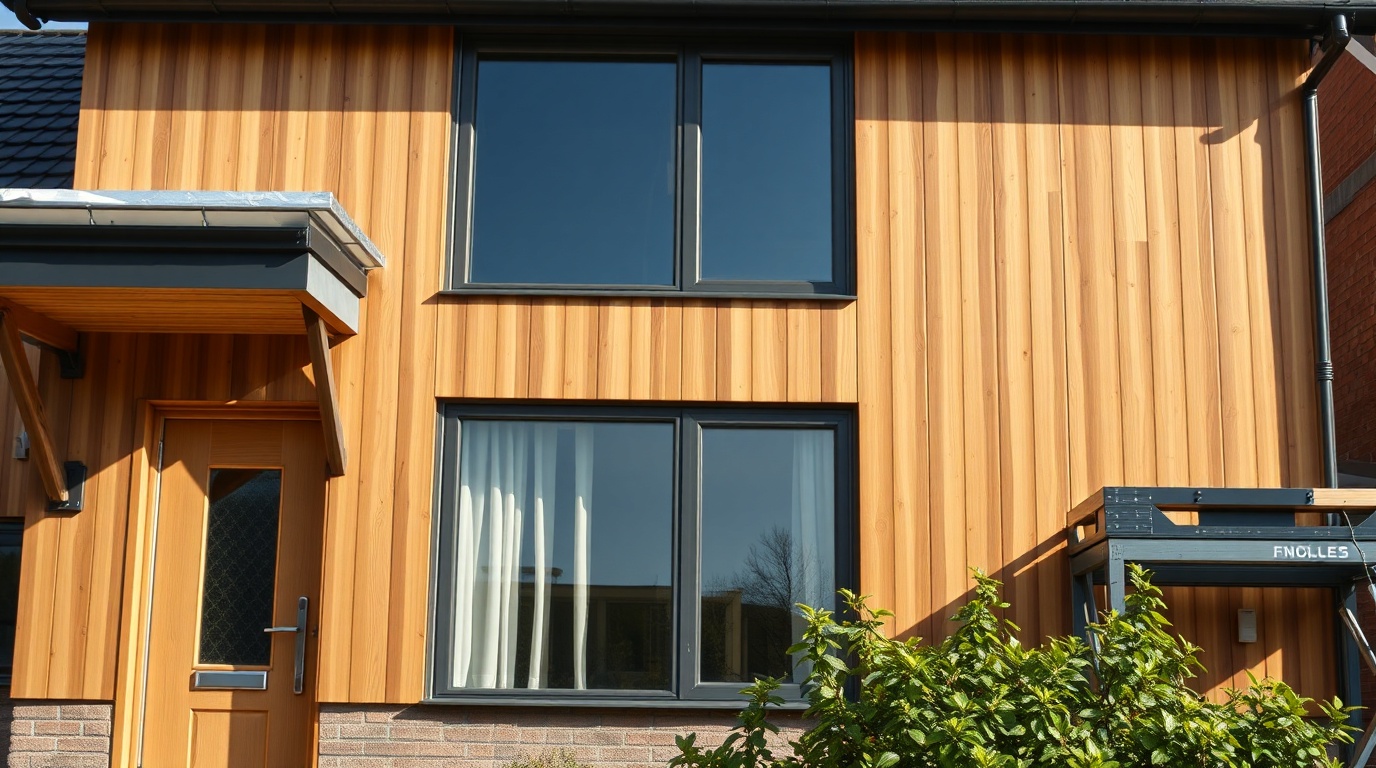
The short answer
Cladding can be a fire risk, but the level of risk depends on the materials used, the whole wall build-up (cladding, insulation, cavity and barriers) and the type and height of building. The well-publicised dangers relate mainly to tall residential blocks with certain combustible systems, not to ordinary low-rise houses, and the rules reflect that — Approved Document B sets stricter requirements as buildings get taller, including a ban on combustible materials in the external walls of relevant residential buildings over a defined height. For a typical detached or terraced house, compliant cladding with appropriate reaction-to-fire (Euroclass) performance and correct detailing is not an inherent hazard. Fire performance is judged on the complete system, not one material, and fire-critical decisions should be confirmed with building control or a fire professional.
Cladding fire safety is a serious and sometimes misunderstood subject. This page sets out the real factors in measured terms and points fire-critical decisions to the right professionals.
What drives cladding fire risk
- Material classEuroclass reaction to fire
- Whole systemcladding + insulation + cavity
- Building heightstricter rules when taller
- Cavity barriersstop fire spread in the gap
- Houses vs blocksrules and risk differ greatly
Risk depends on materials and the whole system
Whether cladding is a fire risk is not a yes/no answer about a single product. It depends on:
- The reaction-to-fire class of the cladding material (its Euroclass rating), and that of the insulation behind it.
- The whole wall build-up — cladding, any insulation, the cavity and the cavity barriers — because fire behaviour is a property of the complete system, not one layer.
- The presence and correctness of cavity barriers that stop fire and smoke spreading unseen in the air gap.
- The quality of installation and detailing, which can undermine even good materials if done poorly.
A non-combustible cladding over a combustible insulation, or a good material with missing cavity barriers, can perform worse than the headline cladding class suggests. This is why fire performance is assessed at system level.
Houses are treated differently from tall blocks
Much public concern about cladding fires relates to tall residential buildings, and the regulations reflect that the risk and the rules scale with height and occupancy. Approved Document B applies progressively stricter requirements to taller buildings, and for relevant residential buildings above a defined height there is a ban on combustible materials in the external wall. For a typical individual house — detached, semi or terraced, at normal domestic height — the requirements are less onerous, and a wider range of compliant materials is acceptable. This does not mean material choice is irrelevant on a house; it means the extreme-risk scenarios that drove the tightest rules are mostly about height, escape and occupancy in larger buildings.
| Factor | Lower risk | Higher risk / scrutiny |
|---|---|---|
| Building height | low-rise house | tall residential block |
| Cladding class | non-combustible (A1/A2) | combustible without justification |
| Cavity barriers | present and correct | missing or wrong |
| Build-up | tested compliant system | untested mixed materials |
Indicative guidance only; the building control body or fire professional confirms compliance.
What good practice looks like
For cladding to be safe and compliant, the system should use materials with appropriate reaction-to-fire performance for the building, include correctly installed cavity barriers where needed, and be designed and built to a recognised standard with the whole build-up considered together. On houses, common compliant approaches include non-combustible boards such as fibre cement, masonry and metal, and timber where its use is justified for the building type and location. Keeping records of the materials, their fire classifications and the system specification matters for compliance, insurance and resale. Where there is any doubt — particularly near boundaries, on flats, or on taller buildings — the safe step is to verify with building control or a competent fire professional.
If you are worried about existing cladding
If you live in a house and are concerned about existing cladding, the practical steps are to find out what materials were used and whether the work had building control sign-off, and to keep that documentation. If you live in a flat or block, fire safety is handled through the building's fire risk assessment and, for some buildings, processes such as the EWS1 form (covered on our separate page) — your building owner or managing agent is responsible for these, and you should raise concerns with them. In all cases, avoid acting on safety-critical remediation yourself: identifying and fixing a genuine cladding fire risk is specialist work for qualified professionals and the responsible building owner, with building control involvement.
Frequently asked questions
Is cladding on a normal house dangerous?
Not inherently. The most serious cladding fire concerns relate to tall residential blocks, and the rules are far stricter for them. For a typical low-rise house, compliant cladding with appropriate fire performance and correct detailing is not an inherent hazard, but materials still matter and should meet Building Regulations.
Does the type of cladding material change the fire risk?
Yes. A material's reaction-to-fire (Euroclass) class matters, but so does the whole build-up — insulation, cavity and cavity barriers — because fire behaviour is a property of the complete system. A good cladding over combustible insulation, or with missing cavity barriers, can perform worse than the cladding class alone suggests.
Who should I ask about my cladding's fire safety?
For a house, building control and a competent fire professional can advise, and the building control records show whether work was signed off. For a flat or block, fire safety is the building owner's or managing agent's responsibility through the fire risk assessment, so raise concerns with them rather than acting yourself.
Sources & further reading
Figures on this page are typical UK ranges drawn from published sources and depend on your specific property. They are guidance, not a quotation.