The short answer
The main types of exterior house cladding used in the UK are timber (natural softwoods such as cedar and larch, or thermally modified wood), composite (a wood-fibre and recycled-plastic blend), fibre-cement (cement, sand and cellulose boards), uPVC (hollow plastic planks), metal (aluminium, steel or zinc panels), brick slip (thin brick faces bonded to a backing), and stone (natural or reconstituted facings). They differ mainly in appearance, lifespan, maintenance and cost. Timber and stone give a traditional or natural look but need more care; composite, fibre-cement, uPVC and metal are low-maintenance modern options. Any external cladding work must meet Building Regulations, and fire performance matters on taller or terraced buildings.
Cladding is the weatherproof outer skin fixed to a home's walls. The choice usually comes down to the look you want, how much upkeep you will accept, and budget. Here is how the common UK options compare.
Common UK cladding types
- Timbernatural look, periodic upkeep
- Compositewood-plastic, low maintenance
- Fibre-cementdurable boards, paintable
- uPVClowest-cost, plastic finish
- Metal / stonemodern or premium feature
Natural materials: timber and stone
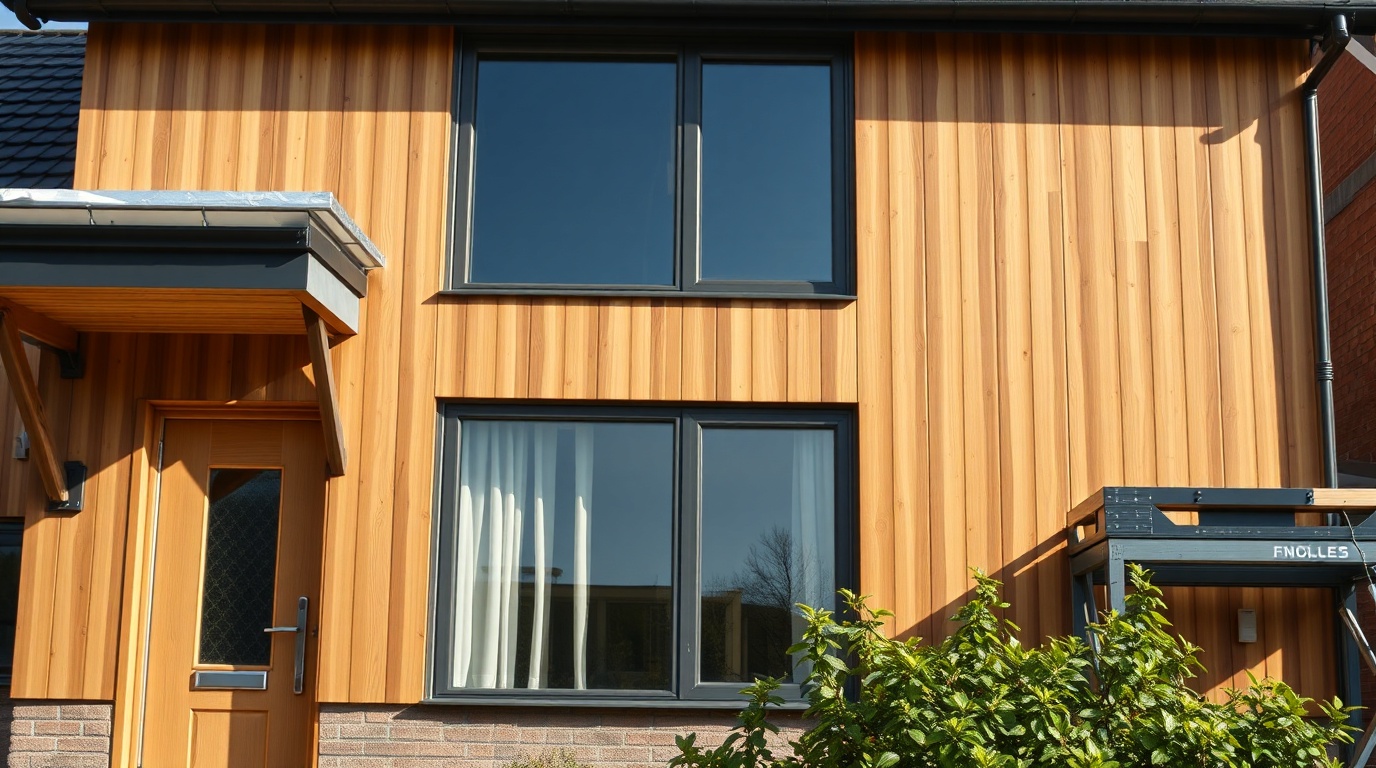
Timber cladding is the traditional choice, usually western red cedar, European larch, Douglas fir, oak or thermally modified softwood. It looks warm and natural and can be left to silver or kept finished with stain or oil. The trade-off is upkeep: most timber needs periodic re-coating, and it weathers visibly if left untreated. Naturally durable species fixed with a ventilated cavity behind the boards and corrosion-resistant fixings last for decades, while poorly detailed timber that stays damp fails sooner.
Stone cladding — either natural stone slips or reconstituted (cast) stone — gives a solid, premium appearance and is extremely durable, but it is heavier and one of the more expensive options to supply and fit. Natural stone offers genuine colour and texture variation; reconstituted stone is more consistent and usually lighter and cheaper. Because stone is heavy, the supporting wall and fixings must be assessed before a large area is fitted. Both timber and stone suit homes where a natural or period appearance is the priority and where some extra cost or upkeep is acceptable in return for character.
Low-maintenance manufactured options
If you want the look without the upkeep, several manufactured boards dominate the UK market:
- Composite cladding blends wood fibre with recycled plastic, mimicking timber while resisting rot and needing only occasional cleaning.
- Fibre-cement boards (such as the well-known weatherboard ranges) are dense, rot-proof and non-combustible, and come pre-finished or paintable.
- uPVC cladding is the budget option — light, cheap and wipe-clean, though it looks more plastic and can fade over time.
- Metal cladding in aluminium, steel or zinc gives a clean, contemporary panel finish and a long life.
Modern manufactured options in detail
It is worth understanding what sets the low-maintenance boards apart, because they are the most common choice on UK homes today. Composite is a wood-plastic blend that imitates timber and resists rot and insects, with capped versions holding colour well. Fibre-cement is a cement, sand and cellulose board that is rot-proof and usually non-combustible, making it the default where fire performance matters; it comes as woodgrain planks or flat panels, pre-finished or paintable. uPVC is rigid hollow plastic — the lowest-cost option, wipe-clean but more obviously plastic and combustible. Metal in aluminium, steel or zinc gives a contemporary, durable, non-combustible finish in panels, standing-seam or profiled sheet. Each is fixed on battens over a ventilated cavity, and each has its own fixing rules around weight, movement and gaps. The choice among them usually comes down to the balance of appearance, fire requirements and budget for your particular home.
How the types compare
The table gives a broad picture. Treat costs as supply-and-fit ranges that vary widely by product, access and region.
| Type | Look | Maintenance | Indicative cost/m² (fitted) |
|---|---|---|---|
| uPVC | Plastic, uniform | Very low | £40–£90 |
| Composite | Wood-like | Low | £60–£130 |
| Timber | Natural | Periodic re-coat | £50–£120 |
| Fibre-cement | Painted board | Low | £60–£120 |
| Metal | Contemporary | Low | £70–£160 |
| Brick slip / stone | Masonry | Very low | £80–£200+ |
Indicative fitted ranges for guidance only; actual prices vary by product, height and access. Sources: Checkatrade and HomeOwners Alliance cost guides.
How cladding is built up
Whatever the material, most cladding works the same way as a system rather than a single layer. Boards or panels are fixed to treated timber or metal battens set out from the wall, which creates a ventilated cavity behind the cladding so air can circulate and any moisture can drain and dry. A breather membrane is often fitted to the wall behind the battens to shed incidental water while letting vapour pass. Where insulation is being added at the same time, an external wall insulation layer can sit behind the cladding, improving the home's thermal performance in the same operation. Good detailing at openings, sills, corners, the eaves and the base is what keeps the whole build-up watertight and long-lasting, which is why installation quality matters as much as the choice of material. The right fixings — corrosion-resistant, and sized for the board — and correct ventilation gaps are specified by the manufacturer for each product.
Choosing the right type
There is no single best cladding — the right one depends on your priorities. For a natural appearance and authenticity, timber or stone wins. For minimal upkeep at a fair price, composite or fibre-cement is the usual sweet spot. For the lowest budget, uPVC does the job but reads as plastic up close. Metal and stone are feature finishes for a modern or premium look. It is also common to mix materials — for example fibre-cement to the main walls with a timber or metal feature on a gable or upper storey — to add interest without cladding the whole house in an expensive finish. Whatever you pick, remember that external cladding is covered by Building Regulations, and fire performance is a key factor on flats, taller homes and buildings close to a boundary — always check the requirements for your property before committing.
Frequently asked questions
Which house cladding lasts the longest?
Fibre-cement, brick slip, stone and good-quality metal cladding can last 50 years or more with little upkeep. Composite typically lasts decades, while uPVC and untreated softwood timber tend to have shorter practical lifespans before they look tired.
Do I need planning permission for cladding?
Re-cladding the same style is often permitted development for a typical house, but listed buildings, flats, conservation areas and changes of appearance can require planning permission. Building Regulations still apply, so check with your local authority before starting.
What is the lowest-maintenance cladding?
Fibre-cement, brick slip, stone and uPVC are among the lowest-maintenance, generally needing only occasional cleaning. Composite is also low-care. Natural timber is the highest-maintenance because it usually needs periodic re-coating or accepting that it will silver over time.
Sources & further reading
- HomeOwners Alliance — cladding guidance
- Checkatrade — cladding cost guide
- TRADA — timber cladding guidance
Figures on this page are typical UK ranges drawn from published sources and depend on your specific property. They are guidance, not a quotation.