The short answer
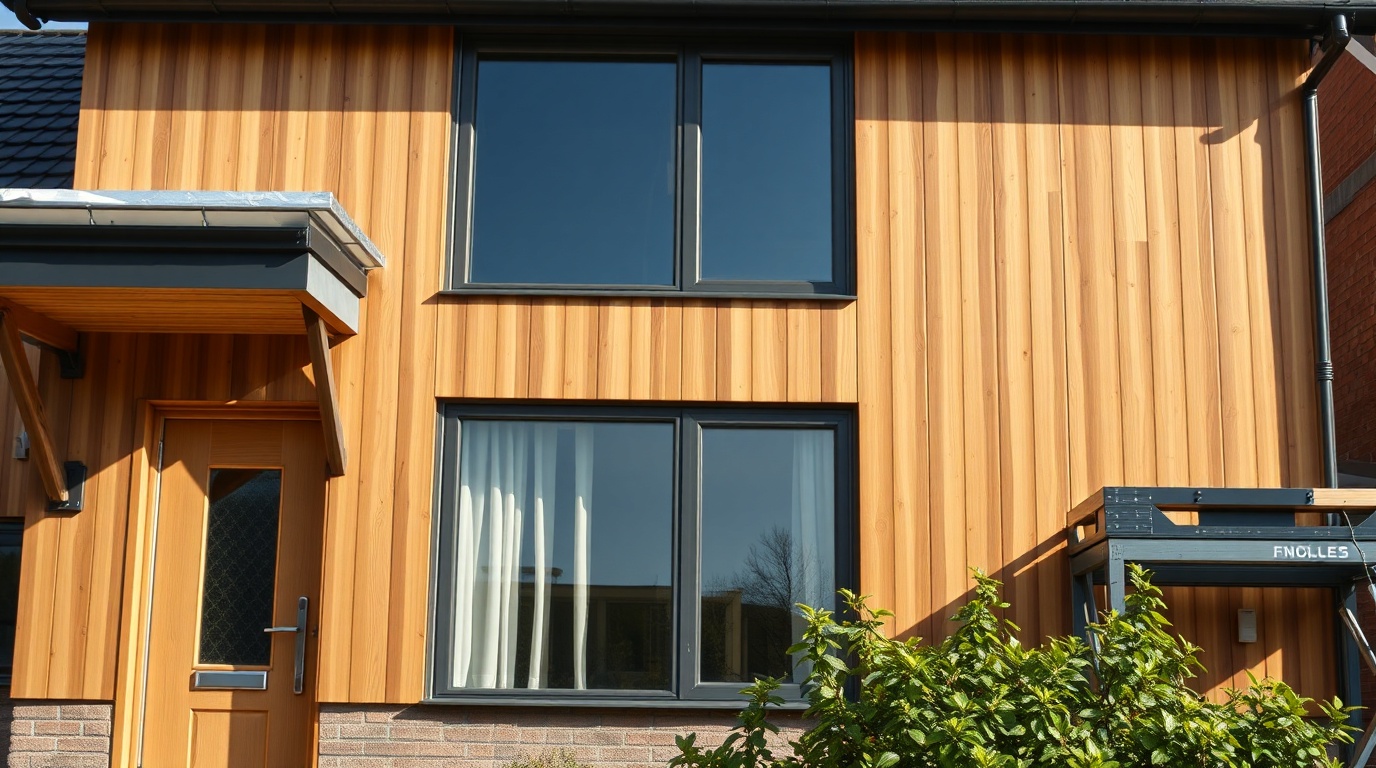
Composite cladding is an exterior wall board made from a blend of wood fibre (or wood flour) and recycled plastic (commonly polyethylene), held together with bonding agents and additives for colour, UV resistance and durability. It is designed to look like natural timber while resisting the rot, warping and insect damage that affect real wood. Boards are usually capped with a protective polymer outer layer that improves fade and stain resistance. Composite needs only occasional cleaning rather than the staining or oiling that timber requires, and it typically lasts for decades. It is heavier and more expensive than uPVC but cheaper to maintain than natural wood, which is why it is a popular middle-ground choice for UK homes.
Composite cladding has grown popular as a low-maintenance alternative to timber. Understanding what goes into it explains both its strengths and its limits.
Composite cladding at a glance
- Made ofwood fibre + recycled plastic
- Finishoften polymer-capped
- Maintenanceoccasional cleaning only
- Typical lifedecades (product-dependent)
- Fitted costaround £60–£130/m²
What composite cladding is made of
Composite cladding is a wood-plastic composite (WPC). The two core ingredients are wood fibre — often sawmill by-product such as wood flour — and recycled plastic, usually high-density polyethylene (HDPE), though some products use polypropylene or PVC. These are combined with binders, pigments and UV-stabilising additives, then extruded into boards. Many modern products are capped or co-extruded, meaning a tough polymer shell is bonded around the composite core. The wood content gives a natural appearance and texture, while the plastic content makes the board resistant to moisture, rot and insects.
How it performs on a house
The appeal of composite is consistency and low upkeep:
- Rot and moisture resistance — the plastic matrix means it does not absorb water like bare timber, so it resists rot and warping.
- Low maintenance — no staining or oiling; an occasional wash keeps it looking right.
- Colour stability — capped boards resist fading better than uncapped ones, though some colour change over years is normal.
- Insect and splinter resistance — it does not host wood-boring insects and will not splinter like timber.
The trade-offs are that it can look slightly more uniform than real wood up close, it expands and contracts with temperature so needs correct fixing gaps, and quality varies a lot between budget and premium ranges.
Capped vs uncapped boards
A distinction that strongly affects quality is whether a board is capped. An uncapped composite is a solid wood-plastic board all the way through; it is cheaper but more exposed to fading, staining and moisture absorption at the surface. A capped (co-extruded) board has a tough polymer shell bonded around the core during manufacture, which markedly improves resistance to fading, scratches, stains and water. Capped boards generally hold their appearance for longer and carry better warranties, which is why most premium ranges are capped. When comparing products it is one of the first things to check, alongside the wood-to-plastic ratio, the board's solidity, whether it is solid or hollow-cored, and the length of the warranty. A cheap uncapped board and a premium capped board can look similar in a brochure but perform very differently over years on a wall, so the specification matters more than the headline price.
Cost and value
Composite sits between uPVC and the more expensive natural finishes on price, but its low maintenance can make it good value over time.
| Factor | Composite cladding | Notes |
|---|---|---|
| Fitted cost | ~£60–£130/m² | varies by product and access |
| Maintenance | Occasional wash | no staining/oiling |
| Lifespan | Decades | capped boards last longer |
| Look | Wood-like | more uniform than real timber |
Indicative fitted ranges for guidance only. Sources: Checkatrade and HomeOwners Alliance cost guides.
Installation and movement
Composite is fixed to battens over a ventilated cavity in much the same way as timber, but its thermal movement needs respecting. Wood-plastic boards expand and contract with temperature, so installers leave expansion gaps at board ends and use clips or fixings designed to allow movement; getting this wrong can cause boards to bow, gap or stress at the fixings. The substrate must be flat and the cavity ventilated so the back of the board can breathe and any incidental moisture can escape. Most reputable suppliers publish detailed fixing instructions — including batten spacing, fixing type, gap sizes and end clearances — and following them is essential to the warranty. Because the boards are heavier than uPVC, the supporting framework must be specified accordingly. For a typical house re-clad or an extension this is straightforward work for an experienced installer, but it is not as forgiving as it looks, which is why the manufacturer's guidance should be followed closely.
Sustainability and end of life
Composite's green credentials are mixed. On the positive side, it makes use of recycled plastic and wood by-product, diverting material that might otherwise be waste, and its long life and low maintenance reduce the need for coatings and replacement over time. On the other hand, the bonded mix of wood and plastic is harder to recycle at the end of its life than a single material, and it is combustible. Compared with responsibly sourced timber — which is renewable and can be reused or burned for energy — composite is not clearly greener; it depends on the recycled content, the product's lifespan and how it is disposed of. If sustainability is a priority, ask the supplier about the recycled content, the expected service life and any take-back or recycling options for the specific board.
Is composite right for your home?
Composite suits homeowners who want a timber-look finish without the recurring upkeep of natural wood, and who are willing to pay more than uPVC for a more convincing, longer-lasting board. It is widely used on extensions, garden rooms and full house re-clads. As with any exterior cladding, fitting must comply with Building Regulations, and you should check the product's fire performance — relevant on flats, taller buildings and homes near a boundary. Reputable suppliers publish reaction-to-fire classifications, so ask for these before buying if fire rating matters for your property.
Frequently asked questions
Is composite cladding fireproof?
No material is truly fireproof, and composite contains plastic and wood, so it will burn under enough heat. Many products carry a stated reaction-to-fire classification, and some are formulated to be more fire-resistant. Always check the certified rating for the specific board, especially on flats or taller buildings.
Does composite cladding fade?
Some colour change is normal over years of sun exposure, but capped (co-extruded) boards resist fading much better than uncapped ones. Most fading happens in the first year or two and then stabilises. A good warranty will state the manufacturer's fade tolerance.
How long does composite cladding last?
Quality composite cladding typically lasts for decades with only occasional cleaning. Capped boards tend to outlast uncapped ones because the polymer shell protects the core from moisture and UV. Lifespan depends heavily on product quality and correct installation.
Sources & further reading
Figures on this page are typical UK ranges drawn from published sources and depend on your specific property. They are guidance, not a quotation.